



Restoring naturally rot-resistant old-growth wood is better than replacing it with plantation-grown lumber. Modern farmed lumber is not only expensive but doesn’t hold up compared to denser, more resilient old growth.
The large growth rings in plantation-grown wood make it prone to dry rot. These rings are mostly made up of cellulose and when cellulose becomes wet it becomes food for dry rot fungi. The fungi feed invasive insects that eat holes and create cavities in the wood allowing more moisture to enter and increase the damage. The dense growth rings in old-growth wood make it stronger, more stable and more resistant to decay.
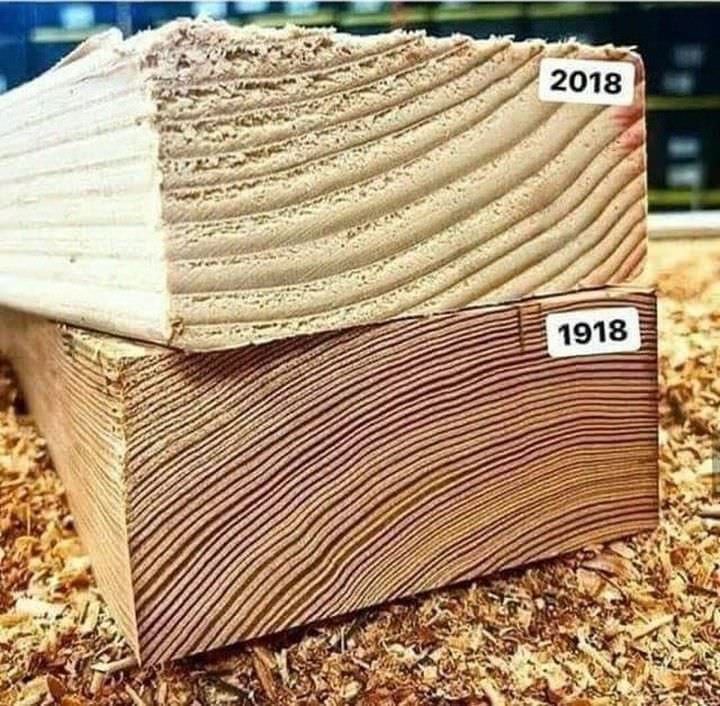
Photo credit: Reddit.com
Notice that the old growth has 60 rings and the new growth only has 16. The old wood is denser, stronger, burns slower, and is more resistant to insects.
Restoring the wood you already have is the most environmentally responsible choice. It reduces deforestation and minimizes the demand for farmed lumber, decreasing the amount of carbon emissions involved in its production and transportation.
Restore-Rite’s StrongBond Wood Restoration System is the most efficient and eco-friendly way to restore old-growth wood. By revitalizing the wood’s structural strength and resistance to decay, the wood’s lifespan is prolonged for decades — making it worth the time and effort you invested in preserving it. With a little careful effort, after sanding and painting your repairs will be undetectable and the wood will be restored to as-good-as-new condition.
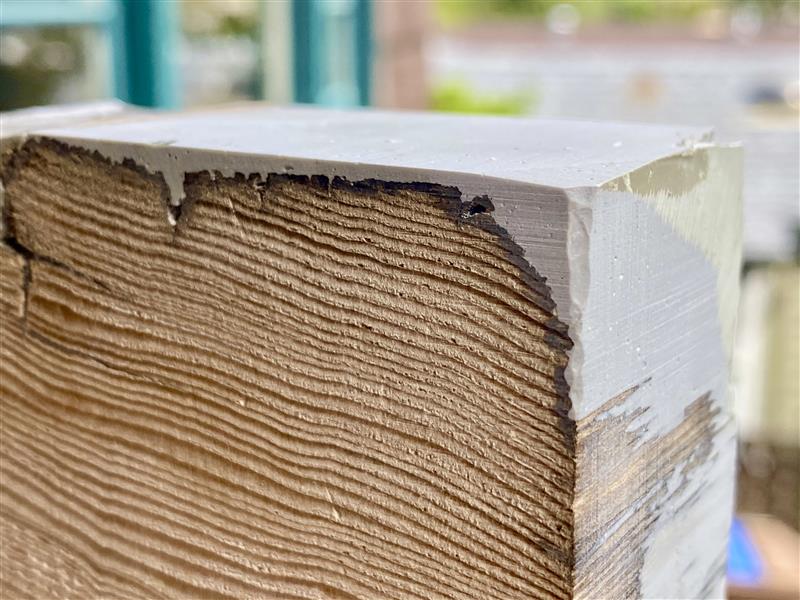
In this sawed section of old-growth wood, the dark areas show where StrongBond Sealer has penetrated the wood. The light areas show where StrongBond Filler was applied and sanded to shape. Note that there are no gaps between the wood and the Sealer and the Filler.
This is a good representation of a chemical bond. As both products cure, they undergo a chemical reaction that creates strong molecular bonds. The penetrating Sealer locks into the wood fibers and the Filler, contributing to the overall strength of the repair and resulting in a moisture-resistant barrier that renews the wood’s durability.